

 Australia
  Brazil
  Canada
  Chile
Chile  China
China  Columbia
  Denmark
  Egypt
Egypt  France
  India
India  Indonesia
  Ireland
  Italy
Italy  Malaysia
  New Zealand
  Norway
  Panama
  Peru
Peru  Poland
  Portugal
  Saudi Arabia
  Singapore
  South Korea
  Spain
Spain  Sweden
  Taiwan
  Thailand
  Türkiye
  United States
  Vietnam


How to reconfigure THE road network for increased traffic ahead of new housing developments
With more than 4,000 new homes planned to be built along the A249 corridor in the borough of Swale, Kent County Council (KCC) needed to develop the local road network to prevent traffic congestion and improve the infrastructure for safe walking and cycling.
One critical junction in the network is the Key Street roundabout over the A249, near the town of Sittingbourne. It was identified by KCC as a strategic interchange requiring significant improvements to support anticipated traffic growth over the next 20 years. The junction needed to be redesigned to increase capacity, improve safety for all users, and introduce walking and cycling routes for residents.
Having worked with Kent County Council on previous transport design, engineering and consultancy projects over many years, SYSTRA was appointed to design the necessary enhancements to Key Street junction and provide support for the construction programme.

Innovation in transport modelling, highways design and ecological management
SYSTRA was responsible for the outline design, detailed design and construction support for the Key Street junction improvements. The full range of services we provided included business case development, public consultation, highways lighting, drainage and structural design, environmental consultancy, landscape design, geotechnical engineering and traffic modelling. We also took on the role of principal designer. We assembled a project team comprising specialists from all these disciplines, overseen by our London Infrastructure team.
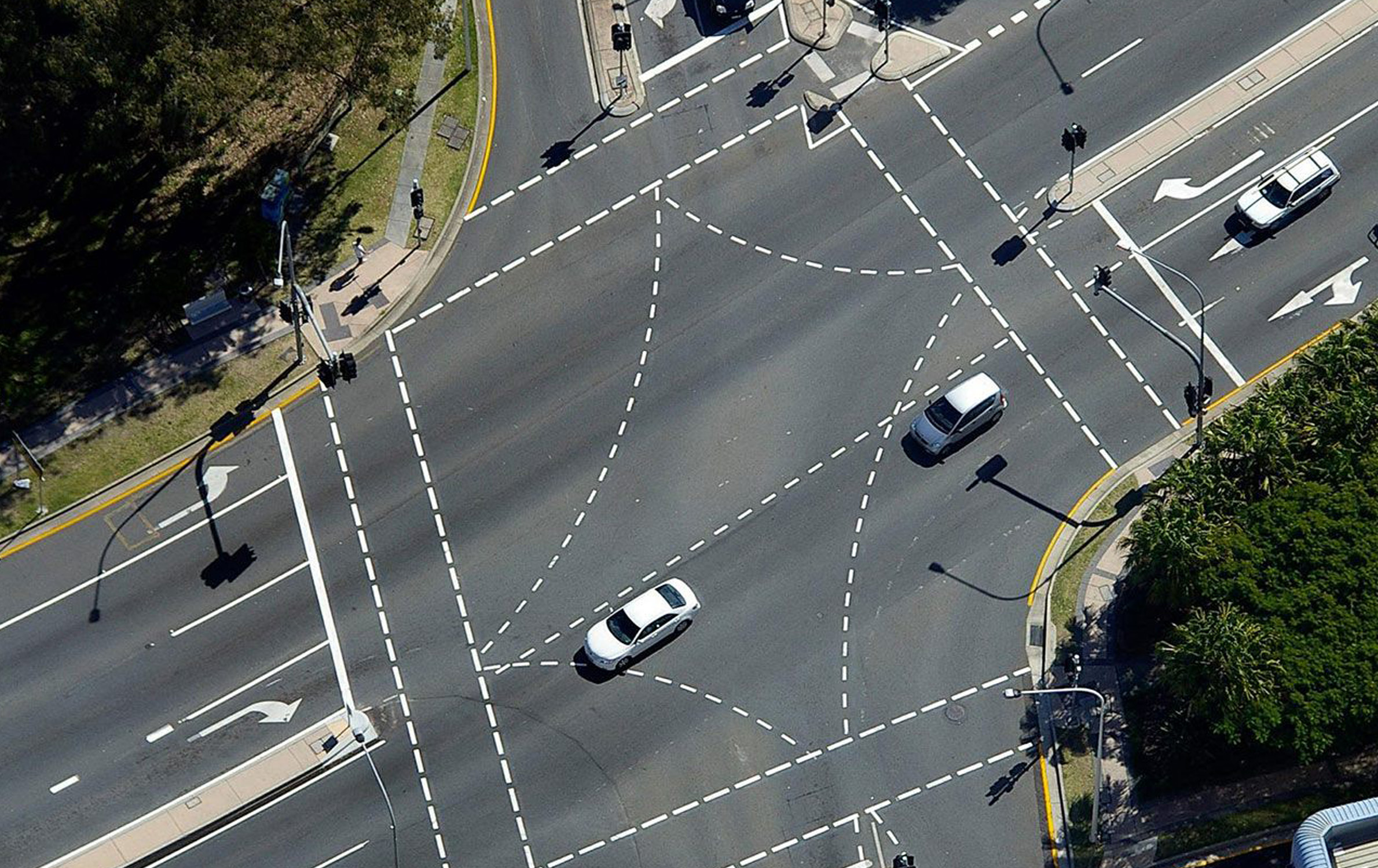
Our design solution for the reconfigured Key Street junction incorporated:
- An extra lane at the Chestnut Street roundabout arm.
- Closure of the existing A249 southbound exit slip road, with southbound traffic redirected along Chestnut Street.
- An extra left turn lane on the A2 Key Street arm approach.
- Capacity and safety improvements to the Keycol Hill arm.
- A new toucan crossing on the Sheppey Way roundabout arm, providing a safe crossing for pedestrians and cyclists.
To improve cycling and walking infrastructure, we needed to widen footways to meet the latest design standards. However, footways around the junction were constrained by existing structures, which called for some innovative design solutions. One example of this innovation was the Keycol Hill footway, where there was an existing retaining wall with private properties at the top of the retained embankment. To enable the path to be widened here, we developed a geotechnical ground anchor system to stabilise the slope and provide a cost-effective solution that minimised disruption to residents and wildlife.
Kent County Council also commissioned SYSTRA to carry out ecological assessments at the site, to ensure impacts on wildlife and flora were minimised or mitigated. This resulted in a range of initiatives, including relocating reptiles to a receptor site at Iwade Nature Park, where we created a hibernaculum, and obtaining a dormouse licence to manage impacts on this protected species.

Collaboration and consultation ease transport planning and approval
Regular collaboration with key stakeholders was the cornerstone of this project. We held bi-weekly meetings with the KCC team to provide updates and ensure the design closely aligned with their aspirations. We had regular meetings with National Highways to discuss the A249 slip road and other elements that came under its ownership, ensuring that all actions required of National Highways were clearly documented.
We met with Swale Borough Council and the Environment Agency to co-ordinate landscape, environment and ecology work. We also held sessions with Borden Parish Council to discuss the junction design, answer questions and solicit feedback.
Restrictions imposed during the Covid-19 lockdowns meant we had to adopt an innovative approach to the consultation process. We created virtual ‘consultation halls’, enabling the public to review the scheme online and provide comments and questions. This process produced valuable and insightful feedback, highlighting issues that we addressed in the final design.

Better connectivity and sustainability – reduced traffic congestion and air pollution
The collaborative approach adopted by SYSTRA was key to addressing challenges and enabling the project to advance smoothly through all key stages. Positive feedback from public consultations enabled the plans to progress swiftly to the detailed design phase. Technical approval of the detailed design pack allowed construction to begin on schedule.
The redesigned Key Street junction will provide the required road capacity to enable planned house building to proceed over the next 20 years. It will ease traffic flows and enable people to cycle or walk safely around the area. These improvements will help the local community to benefit from the new housing developments and employment opportunities, without suffering increased traffic congestion or exposure to risks when cycling or walking.
The improved junction also supports local businesses by providing more reliable connections with the A2/M2. Reducing congestion in the area will help to reduce air pollution and increase safety for all road users. In addition, it’s hoped that the new cycling and walking routes will encourage more people to choose these active, sustainable modes of transport for local journeys.
Related Project: Kent County Council: Grovehurst A249 Junction Improvement
We’d love to help with your next project

Our Markets
Read more sur Our Markets
Our Services
Read more sur Our Services

- Expert Insights
Jordan SMITH