
 Australia
  Brazil
  Canada
  Chile
Chile  China
China  Columbia
  Denmark
  Egypt
Egypt  France
  India
India  Indonesia
  Ireland
  Italy
Italy  Malaysia
  New Zealand
  Norway
  Panama
  Peru
Peru  Poland
  Portugal
  Saudi Arabia
  Singapore
  South Korea
  Spain
Spain  Sweden
  Taiwan
  Thailand
  Türkiye
  United Kingdom
  United States
  Vietnam


Innovating for higher-performing, more resource-efficient and more resilient infrastructure
Key points
- Innovation serving a concrete objective: improving the performance, safety, resilience and sustainability of infrastructure..
- Three main levers: data and digital twins, artificial intelligence serving engineering, and innovation to embed sustainability at the heart of projects.
- Solutions developed from the real needs of project owners, to support better decision-making, reduce risks, improve the quality of deliverables and strengthen long-term control over complexity.
- An approach combining domain expertise, digital technologies and sustainable design methods to improve the performance and reliability of the most complex projects.
- A culture of collaborative innovation, driven by business teams, clients, start-ups and partners to bring forward, test and deploy useful solutions in the field.
At SYSTRA, innovation serves a concrete purpose: improving the performance, safety, resilience, and sustainability of mobility infrastructure.
We innovate based on the needs identified in the projects we deliver around the world. By combining the expertise of our engineers with data, digital twins, artificial intelligence, and sustainable design tools, we develop useful, responsible solutions that are directly applicable to our clients’ challenges.
This approach reflects a strong conviction: innovation creates value when it improves decision-making, reduces risks, facilitates operations, strengthens environmental performance, and enables teams to better manage project complexity.
We focus our efforts on three areas where innovation is already transforming engineering practices: data and digital twins, artificial intelligence, and the sustainability and resilience of infrastructure.

At SYSTRA, innovation means harnessing the passion of our engineers and putting our collective expertise to work to achieve tangible progress: designing infrastructure that is more resource-efficient, safer, more resilient and more sustainable.
Éric Pruvost, Group Director of Innovation & Digital Engineering

Turning data into decisions thanks to the digital twin
Transport projects generate considerable volumes of data: design data, technical documents, BIM models, asset information, operational data, and maintenance data. Their value depends on their quality, their structure, and their ability to be reused throughout the lifecycle of an infrastructure asset.
At SYSTRA, we treat data as an engineering asset. Our goal is to create reliable, traceable, and usable data to better design, deliver, operate, and maintain infrastructure. This approach is based on BIM, digital engineering, and the development of digital twins capable of providing a coherent and evolving view of assets.
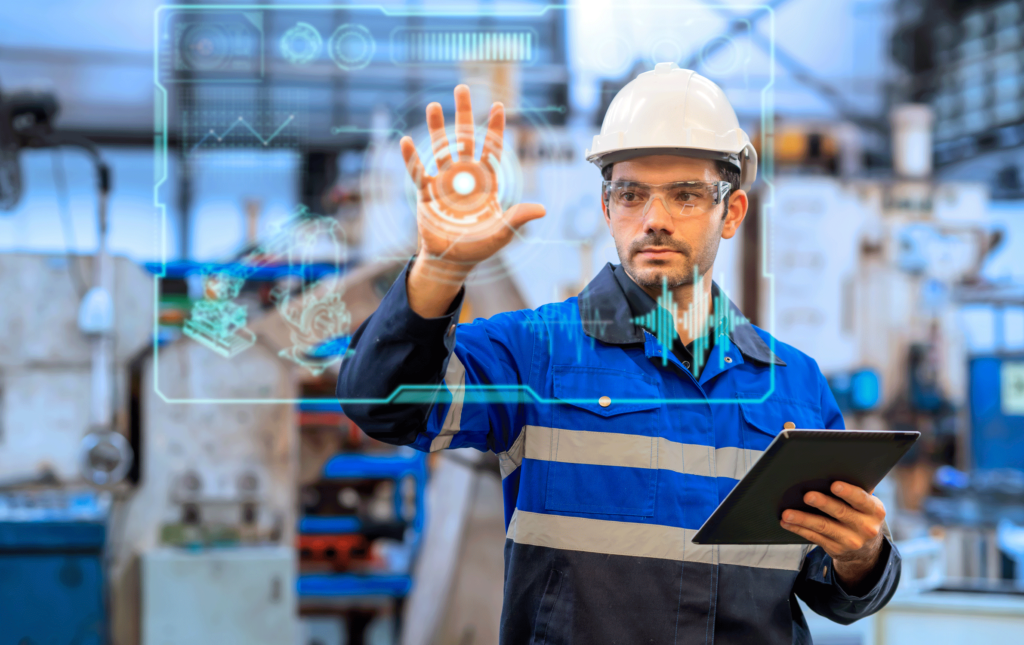
What is a digital twin?
A digital twin is a virtual, structured, and connected representation of a physical infrastructure asset.
It brings together data from design, construction, operations, and maintenance to help teams understand the condition of an asset, test scenarios, anticipate needs, and support decision-making.
This continuity of data helps reduce risks, improve the quality of deliverables, prepare operations more effectively, and make maintenance easier. It also paves the way for smarter infrastructure that can be better monitored, better adapted, and better managed over time.
Our digital twin approach
At SYSTRA, we see the digital twin not as a single platform, but as a tailored service approach designed around each client’s assets, systems and priorities. This approach is led by our Digital Twin Factory, which brings together business and digital expertise, internal solutions and market technologies to develop digital twin services that address concrete operational challenges.
We help clients define what their digital twin needs to achieve, identify priority use cases, assess existing data and systems, and put in place the information architecture needed for implementation. This includes structuring asset data, developing Asset Information Models, improving governance and traceability, and connecting physical and digital environments in a scalable and interoperable way.
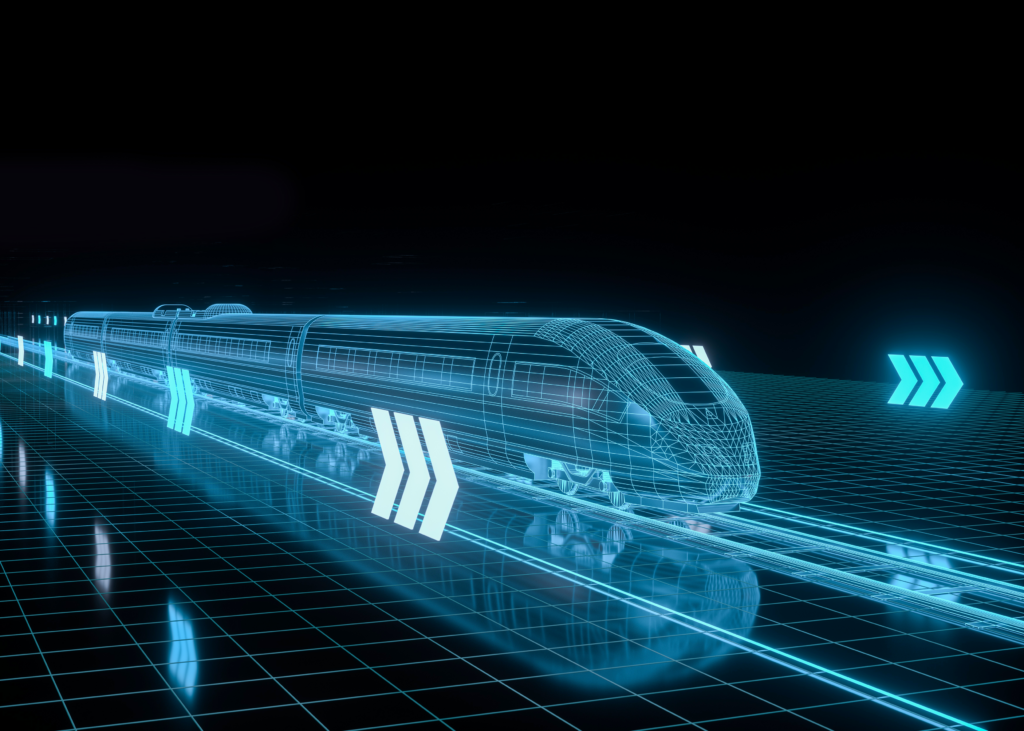
AI serving transport and infrastructure engineering
Artificial intelligence is opening up new possibilities for transport and infrastructure projects. It makes it possible to analyse large volumes of data, compare more scenarios, identify certain risks earlier and accelerate tasks that currently place significant demands on project teams.
At SYSTRA, we develop AI that is grounded in engineering practices. It is designed with our domain experts and applied to specific use cases in areas such as design, construction, systems engineering, maintenance, project governance and knowledge management.
Our AI approach
Our approach is pragmatic and aims to augment the expertise of our teams. It supports them in structuring information, improving process reliability, comparing options and focusing their expertise on higher value-added decisions.
This approach takes shape through targeted use cases. In the early phases, proprietary solutions such as ThunderTrack or AI Bridge Design can help explore and compare alignment or design options more quickly. In operations and maintenance, data analysis can help better anticipate intervention needs and strengthen asset availability. In the governance of major projects, in-house solutions such as Verify or Knower Suite help manage requirements, documentation and technical knowledge more effectively within a secure framework.
L’enjeu est donc d’utiliser l’IA au bon endroit, avec le bon niveau de contrôle, pour améliorer la performance, la qualité et la maîtrise des projets.
Explore our AI solutions for transport and infrastructure engineering →
Innovating to embed sustainability into projects
Innovation fully supports this ambition. It mobilises our ability to design, test and deploy new solutions to integrate sustainability challenges at the heart of projects, making them a driver of performance, resilience, and social and environmental acceptability.
Our innovation approach in support of sustainability
Digital solutions play an essential role in this approach. They make it possible, for example, to integrate climate change and infrastructure resilience challenges from the design stage, as infrastructure faces increasingly complex operating conditions. ClimatePlus helps anticipate the long-term evolution of climate conditions to which infrastructure will be exposed, using reference climate scenarios and models. ClimateViz helps identify, visualise and analyse the climate vulnerabilities of assets, in order to highlight points of fragility, prioritise adaptation measures and guide investment decisions.
Carbon footprint is also a major challenge for our clients. With CarbonTracker, SYSTRA enables teams to measure, visualise and optimise CO₂ emissions at every phase of a project. Compatible with BIM data, the solution automates calculations, facilitates the traceability of high-emission items, compares the carbon weight of different design scenarios and makes visible the greenhouse gas emissions avoided through design choices.
Innovation also supports the energy transition of transport systems. With TESS, SYSTRA helps operators prepare the electrification of their services by estimating vehicle consumption, assessing the impact of operating conditions, defining charging strategies and sizing the infrastructure and equipment required to operate electric fleets.
These solutions share the same purpose: to give project teams and clients practical means to integrate sustainability into design, operation and maintenance decisions, in support of infrastructure that is more resource-efficient, more resilient and better adapted to the conditions of tomorrow.

From idea to implementation: innovation as a collective dynamic
Innovation also relies on a way of working: bringing ideas forward, testing them quickly, measuring their practical value and then applying what works to our projects.
At SYSTRA, collaboration is organised across business teams, clients, start-ups, and industrial and academic partners. It connects expertise, accelerates experimentation and turns ideas into concrete solutions.
The SPARK Challenge
The SPARK Challenge plays a central role in this dynamic. This intrapreneurship programme enables employees to propose, test and develop solutions originating from the field. It has helped bring forward tools that respond directly to business needs, such as BIM in One Click and AI Bridge Design.
The Open SPARK Challenge
Since 2026, this initiative has also been opened to start-ups through Open SPARK Challenge, with the aim of identifying high-potential external solutions and testing them more quickly against project needs.

Partnerships
The technological, industrial and academic partnerships established with Eurostep, or as part of the MINERVE programme with SNCF Réseau, are ways of accelerating the development, validation and deployment of useful innovations.

ISO 56001 certification for SYSTRA Subterra
Since 2019, SYSTRA Subterra has held the ISO 56001:2024 certification for innovation management. This certification attests to its ability to organise innovation in demanding technical fields such as tunnels, geotechnics, mining, and underground engineering.
Discover case studies of innovative USES
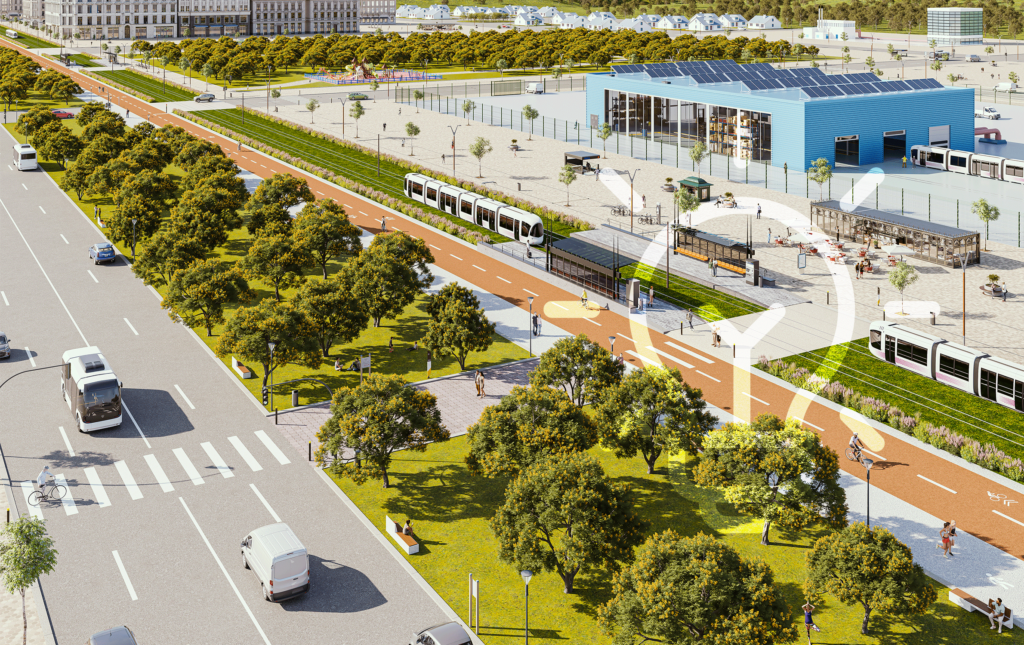
Innovation Story #1: the T10 tramway in Lyon
Read more sur Innovation Story #1: the T10 tramway in Lyon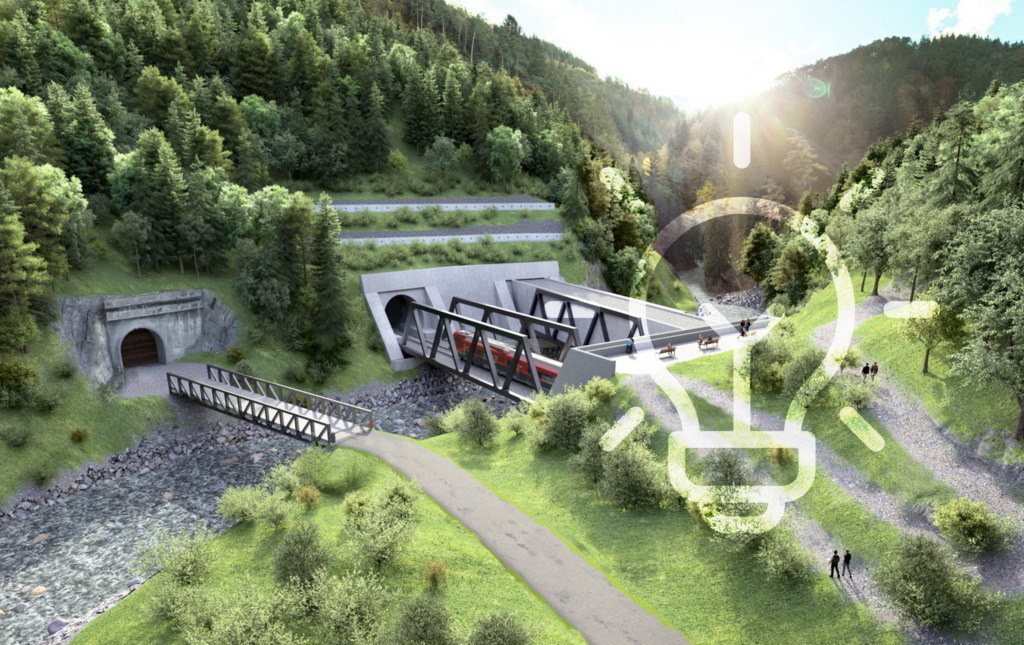
Innovation Story #2: The Brenner Base Tunnel
Read more sur Innovation Story #2: The Brenner Base Tunnel