
 Australia
  Brazil
  Canada
  Chile
Chile  China
China  Columbia
  Denmark
  Egypt
Egypt  France
  India
India  Indonesia
  Ireland
  Italy
Italy  Malaysia
  New Zealand
  Norway
  Panama
  Peru
Peru  Poland
  Portugal
  Saudi Arabia
  Singapore
  South Korea
  Spain
Spain  Sweden
  Taiwan
  Thailand
  Türkiye
  United Kingdom
  United States
  Vietnam


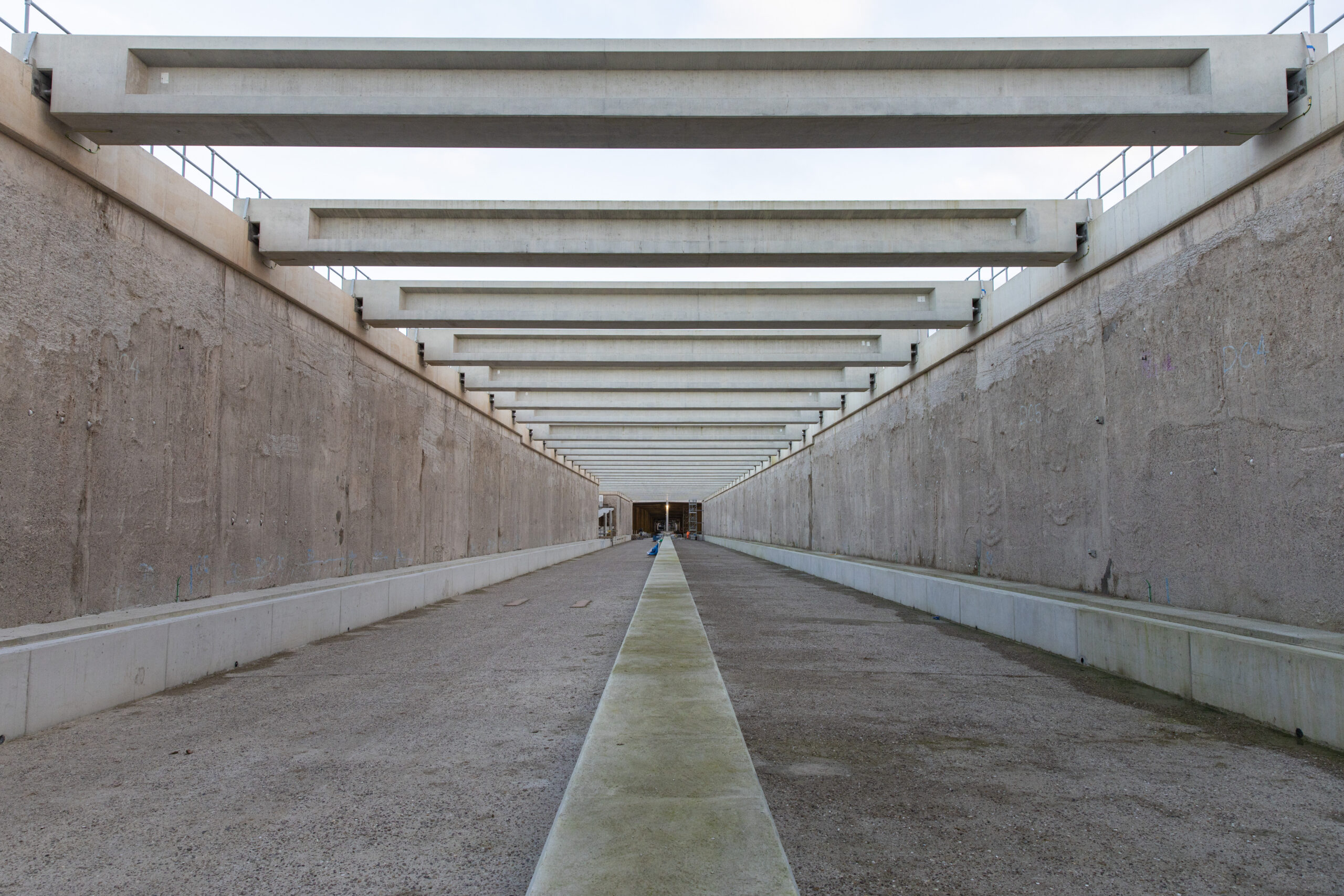
HS2 engineers have installed the final roof segment on the Burton Green tunnel, near the town of Kenilworth, completing the main structure of one of the five ‘green tunnels’ being built along the route.
The 16-metre-wide, twin-box tunnel will carry high-speed trains beneath the village of Burton Green. An internal wall separates trains travelling in each direction.
With the structure now complete, engineers and ecologists will turn their attention to the tunnel’s 500-metre-long green roof. Trees, plants and shrubs will be planted above the structure to help it blend into the surrounding landscape and create green space for local communities.
A railway within the landscape
Connectivity and access have been central to the project. Once the works are complete, the Kenilworth Greenway will be reinstated close to its original alignment above the tunnel. It will provide a route between Balsall Common and Kenilworth, via Burton Green, for walkers, cyclists and horse riders.

The design also had to address the constraints of constructing the tunnel within a narrow corridor through the village.
The completed scheme will restore the original character of the Kenilworth Greenway and reconnect it with the wider ecological landscape above the buried tunnel.
Material excavated during construction is being reused for the wider landscaping works. The planting of native trees and shrubs will create habitats for wildlife and restore vegetated connections with the nearby Black Waste Wood and Little Poors Wood.
A cut-and-cover green tunnel
Burton Green is being built using the cut-and-cover method. These structures are shallower than conventional deep, twin-bore tunnels and are covered with vegetation to reduce their visual impact and integrate the railway into its surroundings.
Work is continuing on the tunnel’s final elements, including an escape walkway and fire protection for the upper walls. Throughout construction, the programme has been carefully planned to maintain vehicle and pedestrian access through Burton Green.