
 Australia
  Brazil
  Canada
  Chile
Chile  China
China  Columbia
  Denmark
  Egypt
Egypt  France
  India
India  Indonesia
  Ireland
  Italy
Italy  Malaysia
  New Zealand
  Norway
  Panama
  Peru
Peru  Poland
  Portugal
  Saudi Arabia
  Singapore
  South Korea
  Spain
Spain  Sweden
  Taiwan
  Thailand
  Türkiye
  United Kingdom
  United States
  Vietnam


Ten years of innovation serving the modelling of linear transport infrastructures
Ten years after its launch, BIM In One Click has established itself as a leading digital solution for the modelling in BIM (Building Information Modelling) of linear transport infrastructures.
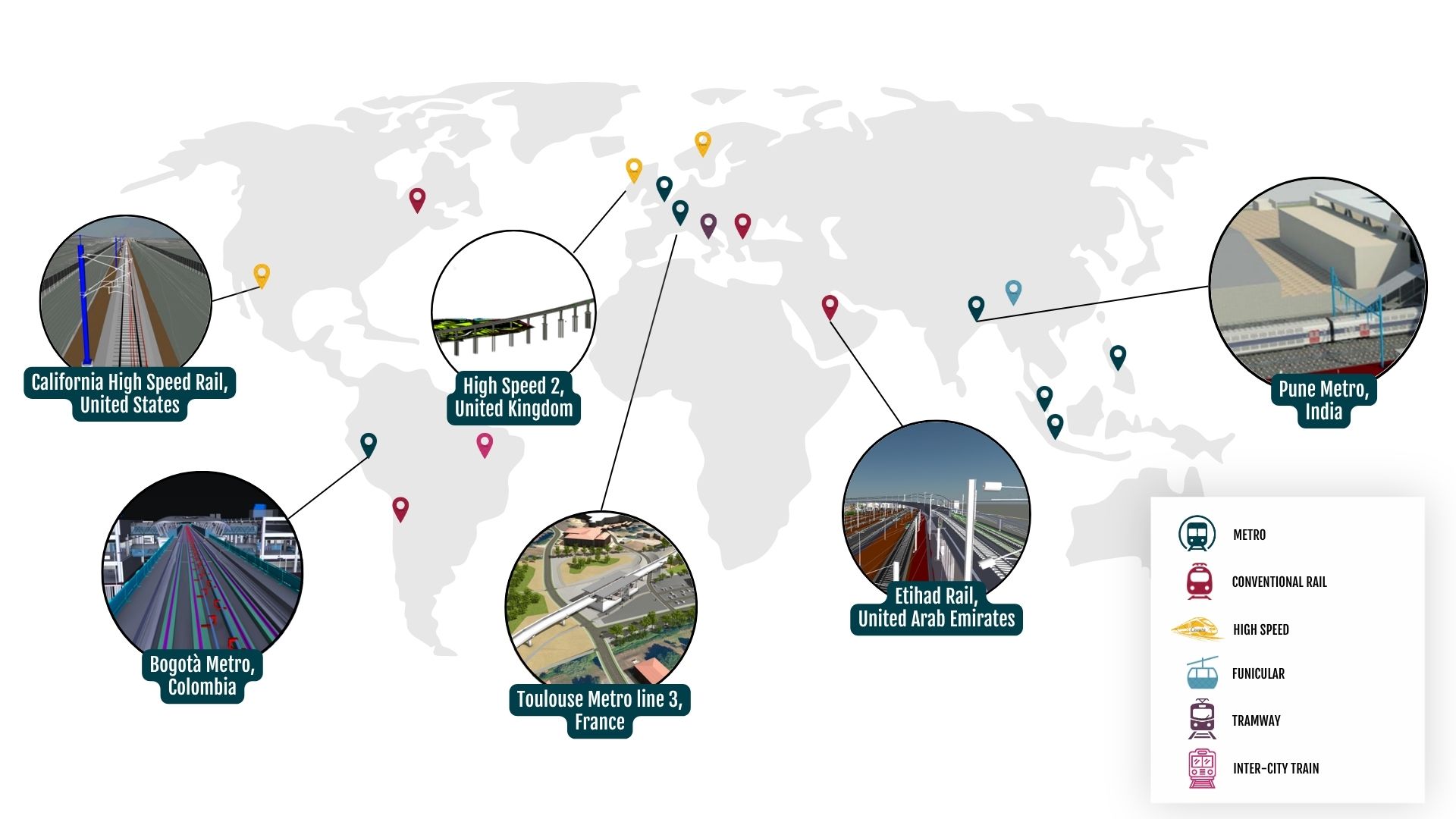
From Toulouse to Bogotá, from Sweden to the United Arab Emirates and as far as California, here is a look back at five key lessons from a SYSTRA innovation designed to accelerate, improve the reliability of, and enhance the design of major mobility projects.
Key points
- Developed by SYSTRA, BIM In One Click addresses 3 key challenges in the modelling of linear infrastructures: faster, more reliable, and more integrated.
- The solution relies on the project alignment to generate BIM objects from engineering parameters and design rules.
- In ten years, it has been deployed on more than 50 projects in 16 countries, with over 2,500km of linear infrastructure modelled.
- Its evolution illustrates a pragmatic approach to innovation: starting from project needs, then building on that by developing new modules for large-scale use.
An innovation resulting from a professional need
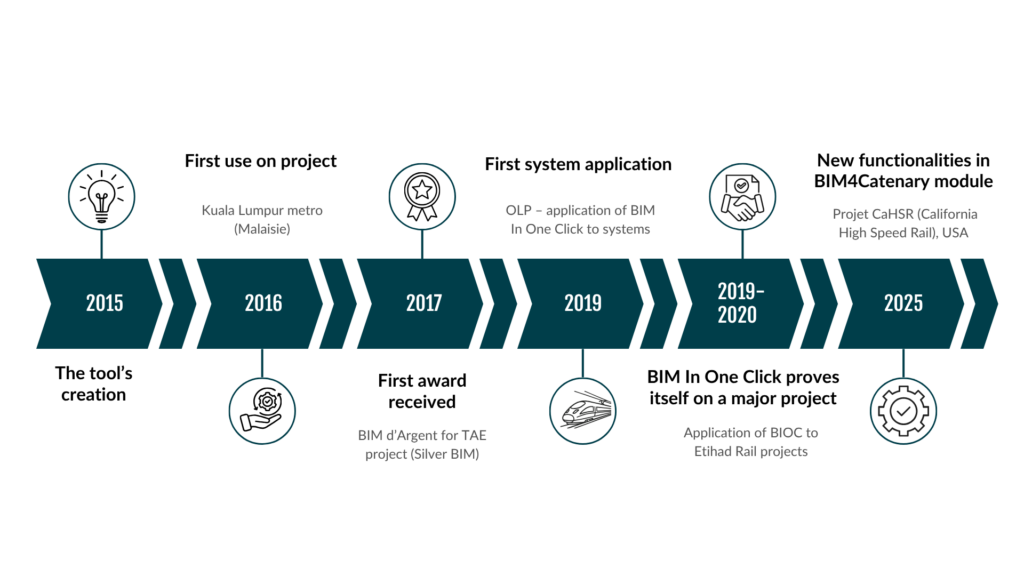
BIM In One Click was created in 2015 as part of a SYSTRA innovation programme. The original idea came from an operational observation: the tools available on the market did not adequately meet the needs of large-scale modelling for linear infrastructures.
These projects often include recurring elements deployed over several kilometres. Modelling them manually takes time. Updating them throughout design variants or project phases, while maintaining perfect integration of each subsystem, can quickly become complex. BIM In One Click provides a practical response to this challenge. The solution makes it possible to generate BIM objects from the alignment and parameters defined by the teams. It facilitates model production, consistency between sections, and adaptation to the requirements of each project.
Since its launch, BIM In One Click has been expanded with modules covering a wide range of disciplines: infrastructure, civil structures, track, railway systems, technical equipment, and other linear objects associated with the railway corridor.
The solution is also part of an open BIM approach, making it easier to exchange information between software tools, disciplines, and stakeholders.
Our business modules
BIM In One Click enables the consistent modeling of all infrastructure components, relying on a structured database and a dedicated library of BIM objects.
BIM In One Click in figures
More than
2,500
kilometers of linear infrastructure modelled
More than
50
projects carried out in 16 countries
12
discipline-specific modules
Up to
40%
time savings in infrastructure modelling
BIM can create value from the early stages
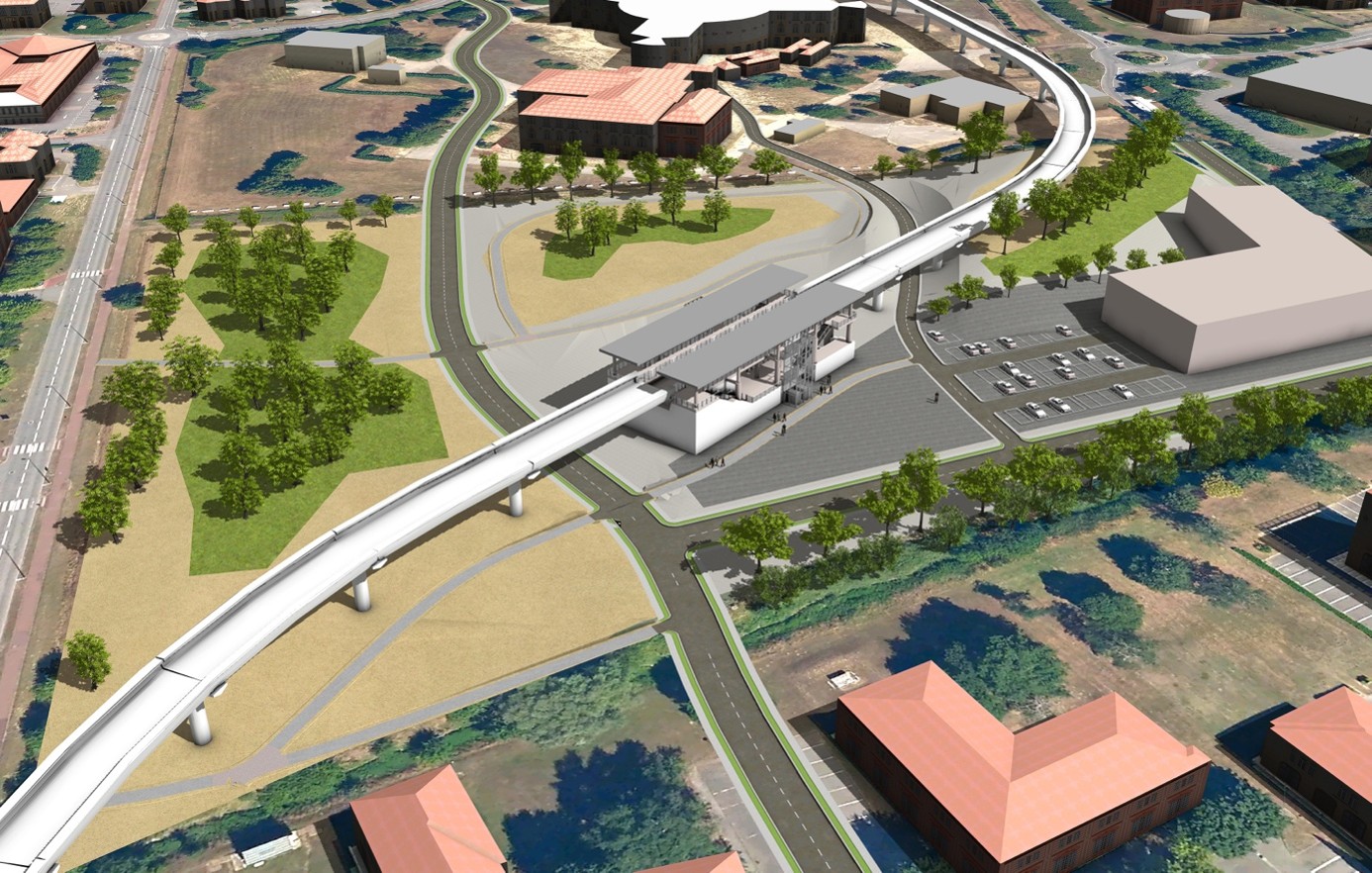
For Toulouse Metro Line 3, SYSTRA used BIM In One Click from the preliminary studies phase, in 2016–2017. The challenge was ambitious: to model the entire alignment, from one terminus to the other, at a stage when design choices were still open.
In a conventional project, full modelling at this level of progress is difficult to justify. It takes time, requires significant resources, and can quickly become costly if design options evolve. BIM In One Click changed that equation. By relying on the alignment, the solution made it possible to quickly produce a coherent representation of the entire linear infrastructure.
This approach gave the teams a continuous view of the line. Stations and ancillary structures were placed back within a complete transport system. The modelling thus helped to better manage interfaces, visualise the urban integration of the infrastructure, and share common information earlier between disciplines.
In Toulouse, BIM In One Click therefore created value where BIM is rarely used at full scale: from the earliest stages. The solution helped teams test design options, update the model more easily, and establish a collaborative dynamic very early on. This approach was recognised with a ‘BIM d’Argent’ award in 2017.
Key figures
27
kilometers of alignment modelled
Approximately
20
kilometers of tunnels and 7 kilometers on viaduct
21
stations, including 10 interchange stations
16
ancillary structures
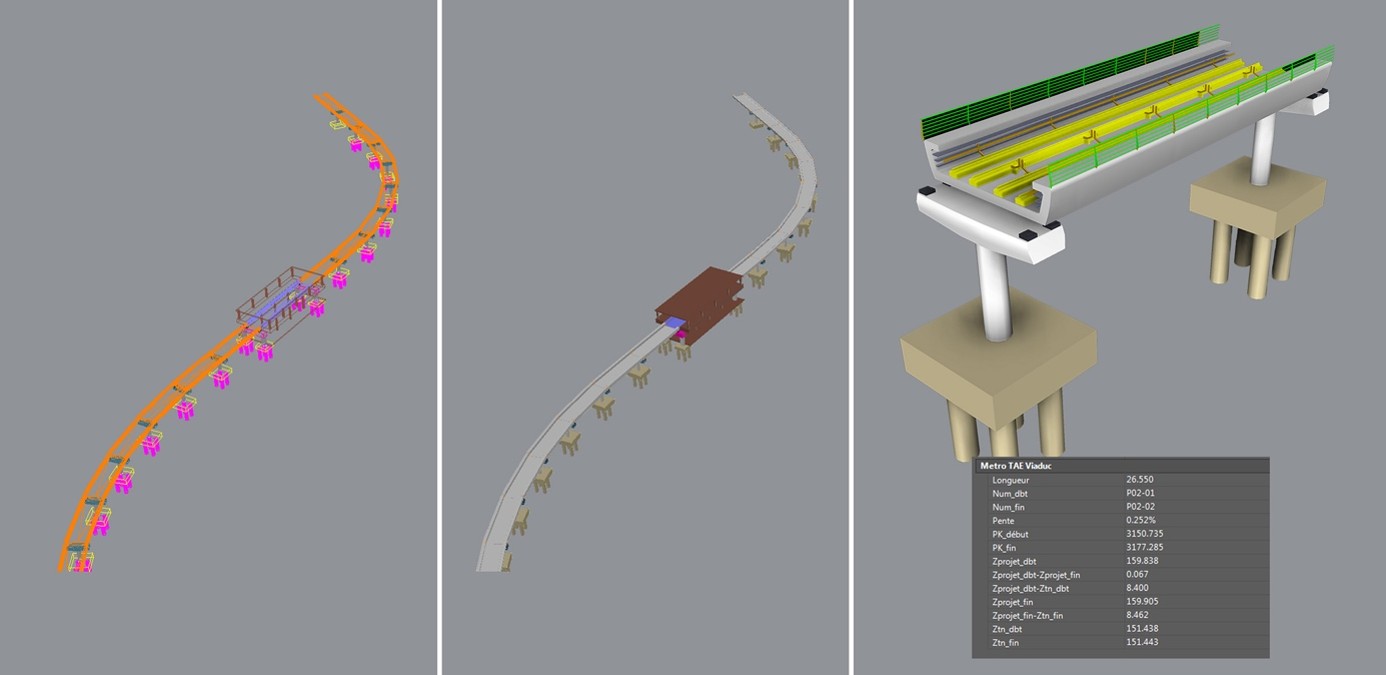
Linear modelling can be accelerated and made more reliable
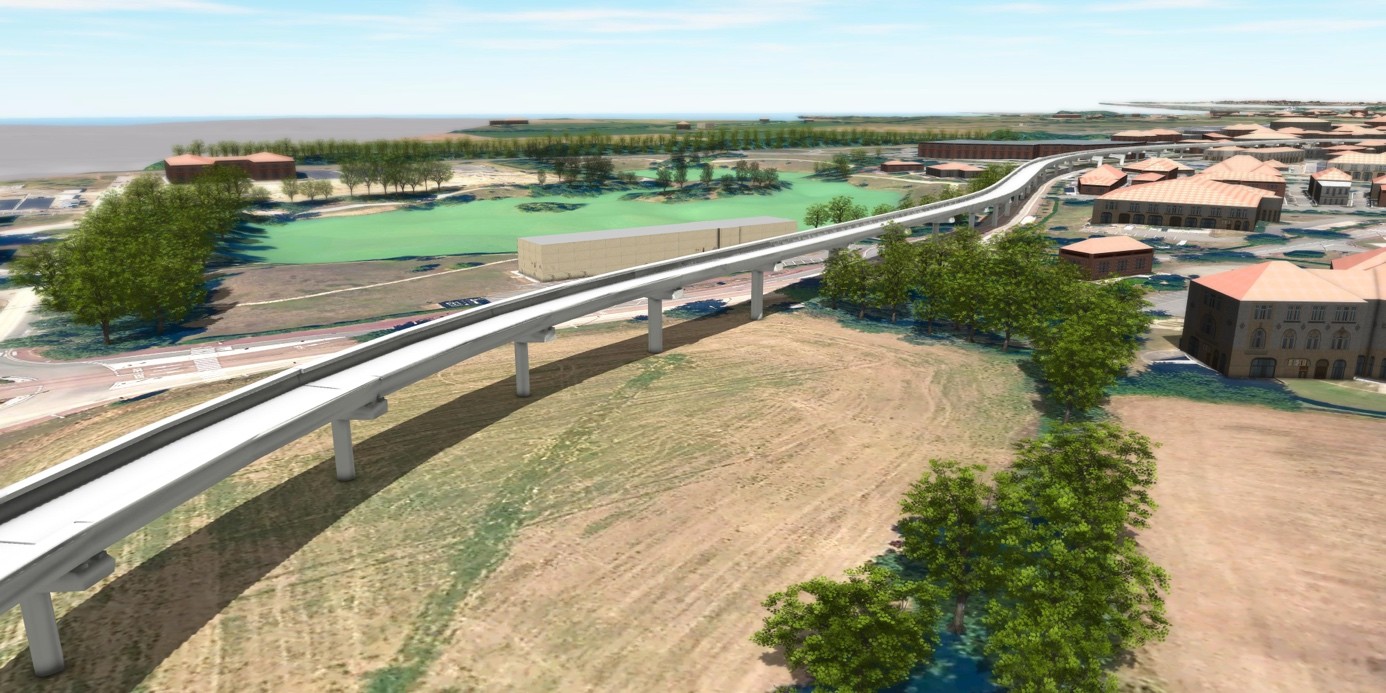
Between 2017 and 2020, SYSTRA carried out the feasibility studies and preliminary design for Bogotá’s first metro line up to a 30% level of detail. This automated elevated line connects the southwest of the Colombian capital to the city centre via Avenida Caracas. It is based on a fully viaduct-based infrastructure, with a U-shaped structure.
On this type of project, the repetition of elements can become a source of complexity. Each object must be positioned precisely along the alignment while remaining consistent with the track, equipment, and integration constraints. In Bogotá, the challenge focused especially on modelling the systems and ensuring their seamless integration with the civil works.
BIM In One Click made it possible to accelerate this modelling by applying the alignment-based logic to the structure, track, and railway equipment. The project was also recognised with a ‘BIM d’Argent’ award in 2018.
The solution was then used again in 2021 for the extension of Line 1. This second application confirms the value of BIM In One Click in supporting a project over time, from the initial line through to its extensions.
Key figures
24
kilometers of automated elevated line
15
stations
2.8
kilometers and 3 additional stations for the extension
BIM In One Click makes it possible to integrate a wide range of systems for high-speed rail
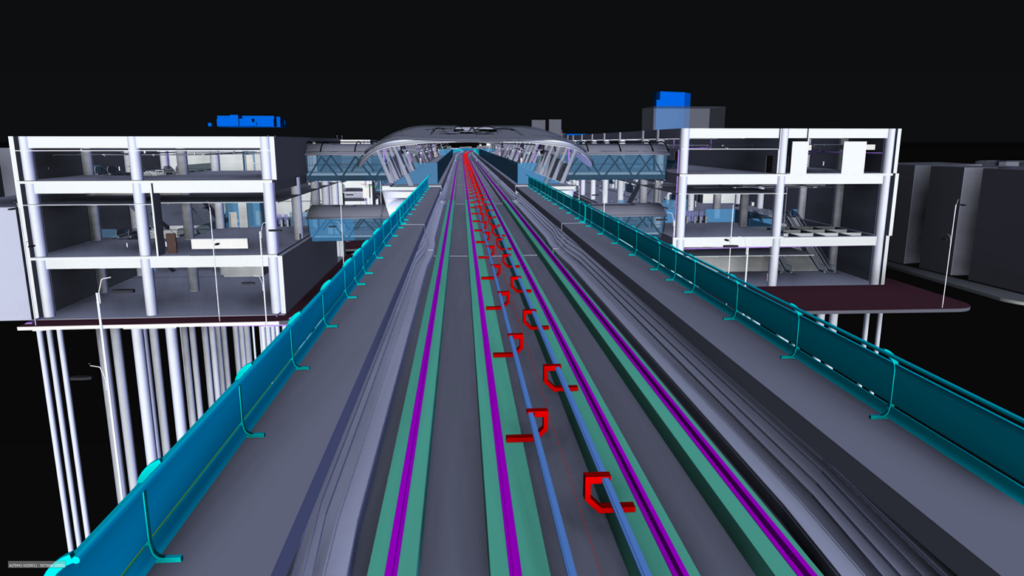
In 2019, BIM In One Click was used on the Östlänken rail project in Sweden, with an especially broad systems scope. The project is part of the future high-speed rail network led by Trafikverket, with a 65-km section between the towns of Stavsjö and Sillekrog, complemented by a conventional track to serve Nyköping station.
Here, the challenge went beyond infrastructure modelling. It involved integrating several railway systems along the alignment: catenary, signalling, cables, telecommunications, power supply, and technical buildings.
This diversity makes coordination more demanding: each discipline must fit within the same corridor, with its own constraints and interfaces. BIM In One Click made it possible to produce a coherent coordination model for the systems component across the entire linear section.
Östlänken thus illustrates the gradual expansion of BIM In One Click’s uses. The solution supports infrastructure modelling and then the progressive integration of the systems that make the line operate.
Key figures
65
kilometers high-speed section between Stavsjö and Sillekrog
15
kilometers of additional conventional track
The solution evolves with project needs
Starting in 2019, BIM In One Click was used on several Etihad Rail lots in the United Arab Emirates. SYSTRA contributed to the detailed design studies for Phase 2, particularly on some of the most complex sections of the programme.
The project aims to strengthen the national rail network by connecting strategic areas of the country. Lot 2D notably links the ports of Jebel Ali and Fujairah through the Hajar Mountains. Lot 2A connects the port of Ruwais to the border area of Ghweifat. These sections include numerous structures: bridges, tunnels, underpasses, and associated infrastructure.
On this large-scale project, BIM In One Click was used to model the track and the train’s 3D clearance envelope across several packages. The solution was also used on Lot 2D for the tunnel and the MEP (mechanical, electrical, and plumbing) equipment, particularly cable ducts and manholes.
Etihad Rail also led the teams to create new ad-hoc modules. The Fences and Culverts modules were developed to model and precisely position fences and culverts along the alignment. They address a very practical need: handling repetitive objects, present in large numbers along lengthy linear sections, with the same level of consistency as the other model components.
On Etihad Rail, BIM In One Click thus demonstrates its ability to handle the scale of a major railway project while adapting to very specific design needs.
Key figures
20
kilometers of tunnel
292
kilometers of cable ducts
195
manholes
245
culverts modelled
The solution can meet very demanding client requirements for a very high level of detail
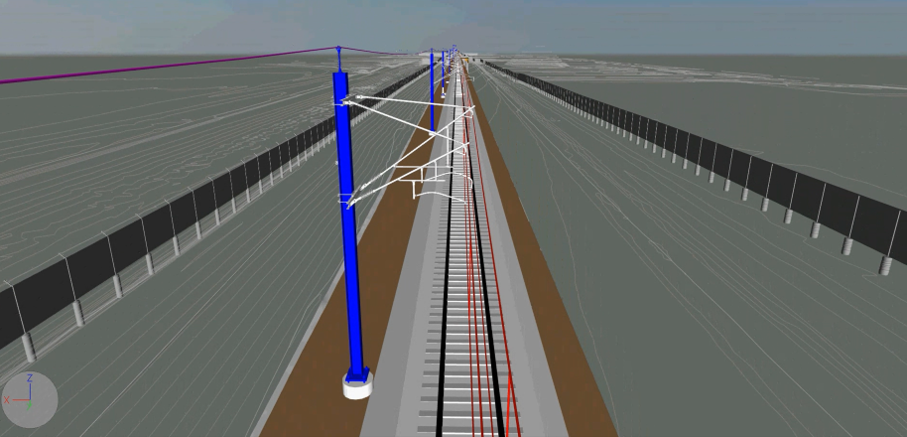
In California, BIM In One Click is being used on a high-speed rail project between San Francisco and the Greater Los Angeles area. SYSTRA, in partnership with Typsa, is using the solution to model the catenary system and traction power installations.
This case marks a new milestone for BIM In One Click. The project requires an especially high level of detail, requested by the client during the detailed design phase. The catenary system must be represented with great precision, well beyond the practices observed on most high-speed rail projects.
Added to this precision requirement is a data exchange challenge. The models must be exportable in IFC 4.3, an open format designed to better describe linear infrastructure and facilitate interoperability between software tools. BIM In One Click enables the teams to meet these expectations, despite the limitations of standard BIM tools for this type of export.
The California case shows that BIM In One Click can support highly demanding projects, where the value of the solution is measured by the quality of the model, the precision of the data, and the ability to meet the client’s standards.
OpenBIM: opening up project data
On major infrastructure projects, BIM data must circulate between many disciplines, software tools, and partners. That is the purpose of openBIM: to enable everyone to work with their own tools while sharing structured information that can be used by all. This approach relies especially on open standards such as IFC Rail, a data exchange format designed to better describe railway infrastructure and facilitate interoperability between software tools. SYSTRA has actively contributed to their development and implements them in its tools.
BIM In One Click is part of this approach by helping teams produce models that comply with open standards. During configuration, the tool supports the selection of object classes and associated properties. The generated models are therefore better structured, more consistent, and easier to exchange between project stakeholders.
This approach reduces the risk of errors, facilitates coordination between disciplines, and strengthens data continuity from design through to the later phases of the project.
An innovation that continues to lead the way
Ten years after its creation, BIM In One Click illustrates a simple conviction: innovation is useful when it responds concretely to project needs. By facilitating modelling, coordination, and data sharing on increasingly complex infrastructures, the solution continues to evolve in line with uses, client expectations, and industry standards. A trajectory that is already opening up new perspectives for the design of tomorrow’s mobility.