 Australia
  Brazil
  Canada
  Chile
Chile  China
China  Columbia
  Denmark
  Egypt
Egypt  France
  India
India  Indonesia
  Italy
Italy  Malaysia
  New Zealand
  Norway
  Panama
  Peru
Peru  Poland
  Portugal
  Saudi Arabia
  Singapore
  South Korea
  Spain
Spain  Sweden
  Taiwan
  Thailand
  Türkiye
  United Kingdom
  United States
  Vietnam


Improving sustainability, affordability and inclusivity in public transport
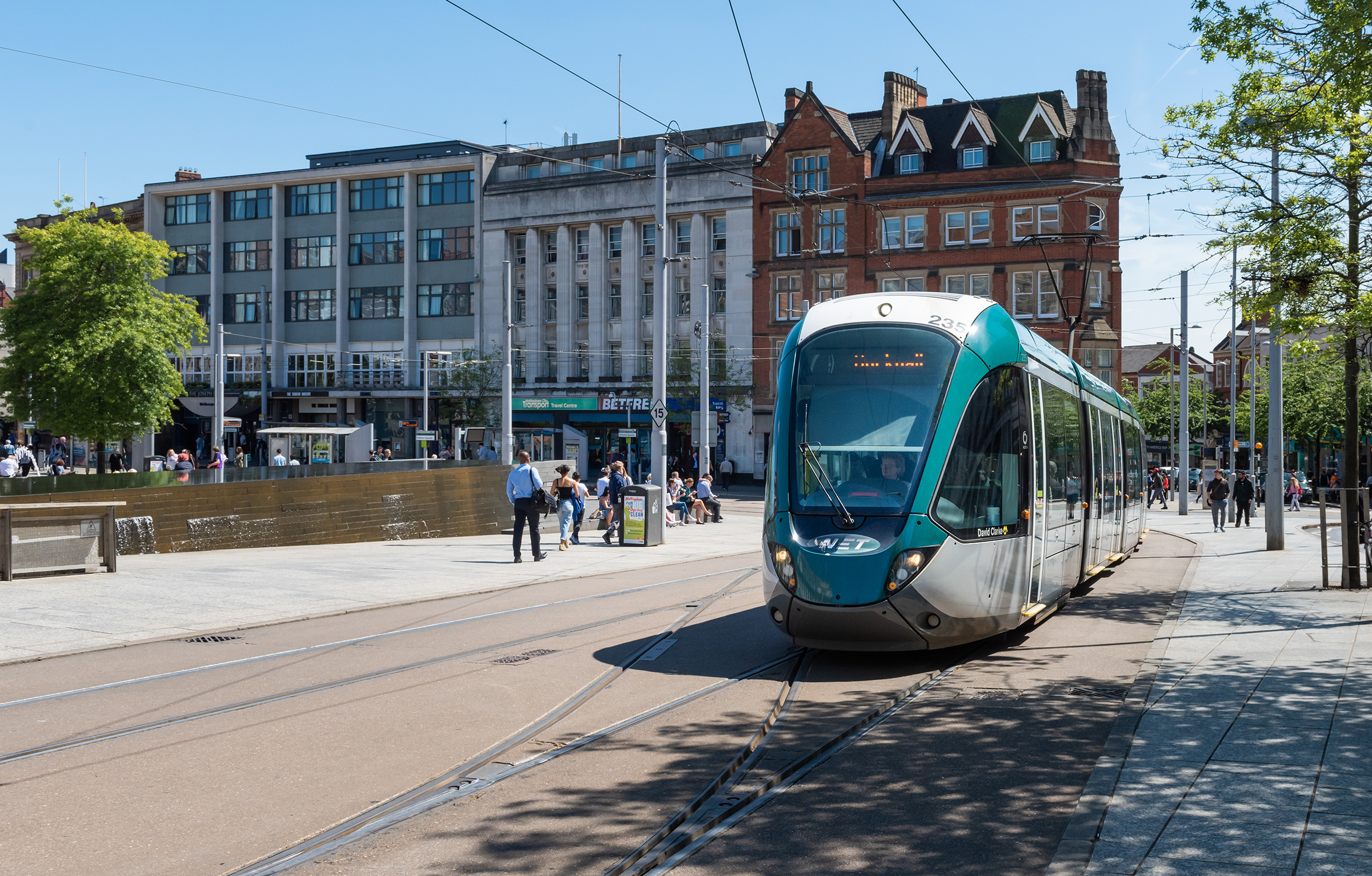
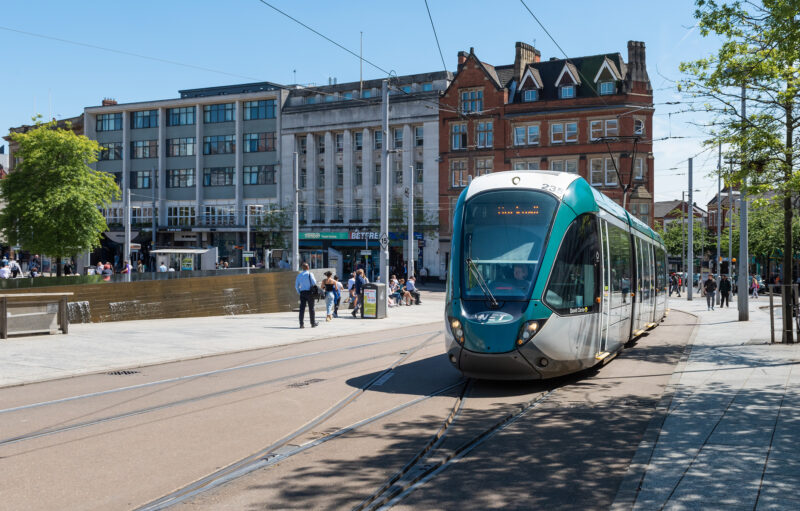
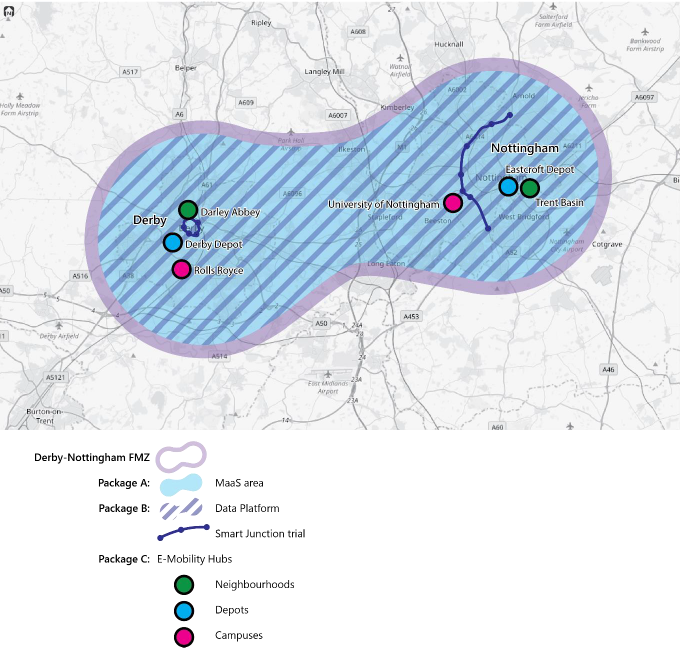
Derby and Nottingham City Councils were awarded £16.7m from the Department for Transport Future Mobility Zones fund, to invest in exciting new projects to improve connectivity and encourage public transport use. The area covered by the Future Mobility Zone programme includes the Derby and Nottingham conurbations and growth areas, including East Midlands Airport and East Midlands Gateway employment zones..
SYSTRA’s role has been to support Nottingham and Derby with the design and delivery of an Open Access MaaS Platform. Each council wanted to take a step back, and had several unanswered questions as to how MaaS (mobility as a service) could and should be implemented in their cities, including.
- What does MaaS look like in their local context?
- How do they align MaaS with local authorities plans in relation to ticketing?
- How can they ensure that MaaS effectively meets the requirements of stakeholders and users alike?
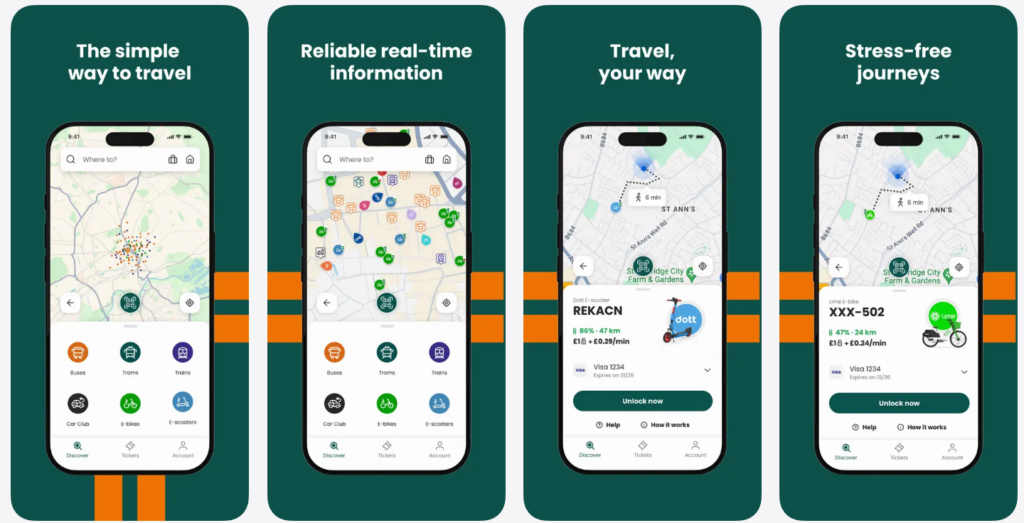
MaaS offers an opportunity to reconsider the way in which sustainable transport services are provided to citizens. Empowering people with access to a wide variety of transport modes, within a single application, in a way that satisfies their travel needs conveniently, effortlessly, reliably and economically, can address many of the issues that local authorities grapple with. Traffic congestion in our towns and cities could be eased; public health improved by promoting active travel; air quality tackled by reducing single occupancy private car use; and finances bolstered for transport operators.
Relationships with stakeholders
This project required an extensive programme of engagement and consultation with stakeholders and the public. Whilst both Councils manage digital and public transport information for their cities, and have good pre-existing relationships with their public transport operators, micro-mobility services, and ticketing providers, there was potential for these stakeholders to maybe be reluctant to participate in a MaaS scheme. The success of MaaS is dependent on the buy-in from all stakeholders, so obtaining commitment from these organisations was essential.
Funding for the platform
Ongoing operating expenditures (OPEX) are a key factor in determining the long-term financial sustainability of a MaaS platform. Derby and Nottingham are acutely aware of the need to ensure the financial viability of the platform to delivery long-term change in transport behaviours. Options needed to be explored for how the platform could secure it long-term future. The councils wanted to create a “customer-first” experience, using new technologies to make travel simpler, and improve equality of access to transport for lower income groups. They also wanted to deliver a clean, green transport network to support air-quality and carbon-neutral objectives, and to support the local economy by reducing congestion and improving accessibility.
Public-sector transport model designed to put local needs first
The Councils’ elected to take the lead in developing their MaaS model, rather than this being shaped directly by the private sector, to ensure it focused on inclusivity, affordability and sustainability. This would give local authorities the leading role in developing fully integrated transport, information and payment services for the area. It would also leave the marketplace open for innovation from smaller companies, since they would not be seen as potential rivals to the operator.
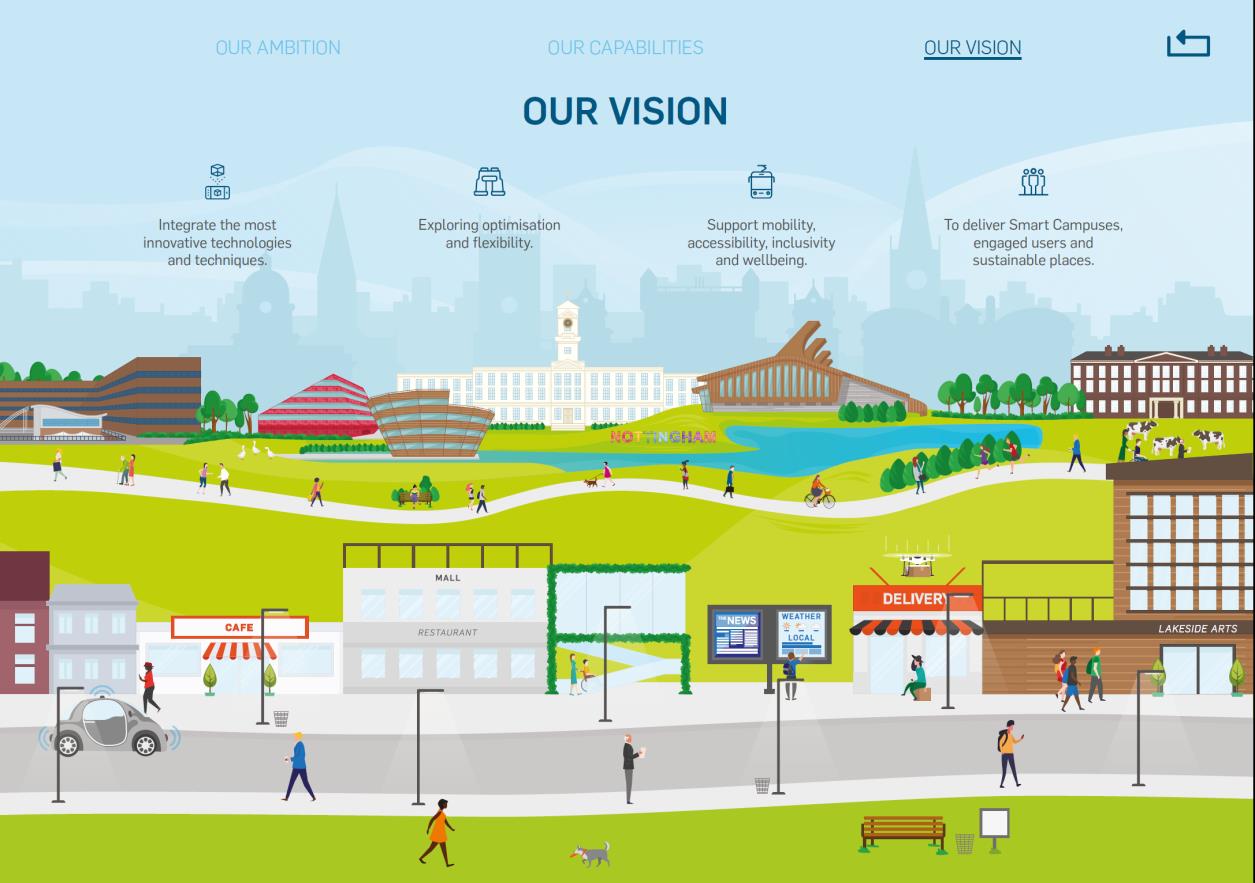
This model would maximise the potential benefits of MaaS for the people who live and work in the Derby-Nottingham area. Our approach considered the long-term plans for housing, local growth, productivity, carbon reduction and air quality in the region.
Stage 1 – Conducting an options appraisal for a MaaS Platform (May 2021 – June 2022)
SYSTRA conducted an extensive co-design programme with members of the public, key internal stakeholders, and transport operators across Derby and Nottingham, as well as potential MaaS providers. This process placed stakeholders and users at the heart of the design process, with the feedback informing the development of an Options Appraisal for an Open Access MaaS Platform, and a subsequent specification for procuring a MaaS provider to deliver the requirements. This stage included the delivery of:
- Stakeholder engagement through depth interviews, focus groups and surveys.
- Qualitative appraisal techniques – e.g. Multi-Criteria Assessments.
- Quantitative appraisal techniques.
- Market testing with MaaS providers.
- Reporting and presentations.
Stage 2 – Procurement Support/Delivery (October 2022 to December 2023)
Following the options appraisal completion, SYTSRA assisted NCC in the design and delivery of a procurement programme. SYSTRA helped develop a procurement strategy, built a Maas specification, prepared tender documentation and technical questions, defined and tracked key project management activities, and undertook further stakeholder engagement to help inform technical activities ahead of a preferred provider being selected. SYSTRA was chosen due to:
- Our understanding of the MaaS platforms options, from the previous stage of work.
- Our previous experience of delivery similar activities with TfWM.
- Our technical expertise in MaaS platform delivery and ticketing.
Stage 3 – Platform Build/Support (April 2024 to present)
SYSTRA is currently providing technical support to NCC and DCC, now that Trafi have been selected as a preferred MaaS provider to build the platform. SYSTRA is helping form project management documentation, supporting stakeholder re-engagement to assist their onboarding into the platform, and advising on journey planning and ticketing elements of the platform.
Consultation process shapes future mobility plans
To develop the MaaS model for Derby-Nottingham, we conducted extensive engagement and co-design activities with key stakeholders and local people. We gathered feedback through interviews and workshops, to find out what key features could and should be included in the MaaS platform. These features were prioritised in the bespoke MaaS solution we developed.
SYSTRA’s methodology was based on the Design Council’s ‘Double Diamond’ approach, which ensures user and stakeholder-focused design. The approach includes four stages: Discover, Define, Develop, and Deliver. SYSTRA also built a rich understanding of the local context for each city, including socio-demographic profiles, existing transport provisions and current payment options/ ticketing, and future roadmaps for ticketing.
This approach was reliant on building strong relationships with stakeholders (the client, public transport operators, ticketing providers and micro-mobility organisations) to obtain their ongoing inputs and commitment to the MaaS scheme.
SYSTRA’s team was multi-disciplinary, spanning Social & Market Research, Ticketing, Movement & Place, and Appraisal teams. This required strong connectivity and communication between team members to keep deliverables and timescales to track, and in line with client requirements.
Procurement of MaaS provider
The options appraisal was successful, in that it provided Nottingham and Derby with the information they required to procure a MaaS platform provider.
SYSTRA subsequently worked with both Nottingham and Derby City Councils to help in the procurement of a MaaS provider. Our roles included developing a procurement strategy, preparing tender documentation and continuing to develop the MaaS Specification and background preparation for delivery; with the co-designed requirements placed at the heart of what a chosen supplier would need to offer in their platform.
The SYSTRA team engaged key stakeholders in early 2023. The tender documentation (ITT) was released in summer 2023 which was followed by a tender evaluation and award in spring 2024. Communications have continued through 2024 and the platform build has commenced through autumn 2024, with an alpha launch of the platform currently planned for early 2026.
The success of the project in the longer-term will be measured by monitoring and evaluating changes in travel patterns and modes across each city, as well as the long-term sustainability of the MaaS platform in driving this behaviour change.
We’d love to help with your next project

Our Markets
Read more sur Our Markets
Our Services
Read more sur Our Services
- services
Behavioural Change in Transport
Read more sur Behavioural Change in Transport
- services
Fares and Ticketing Strategy
Read more sur Fares and Ticketing Strategy
- services